

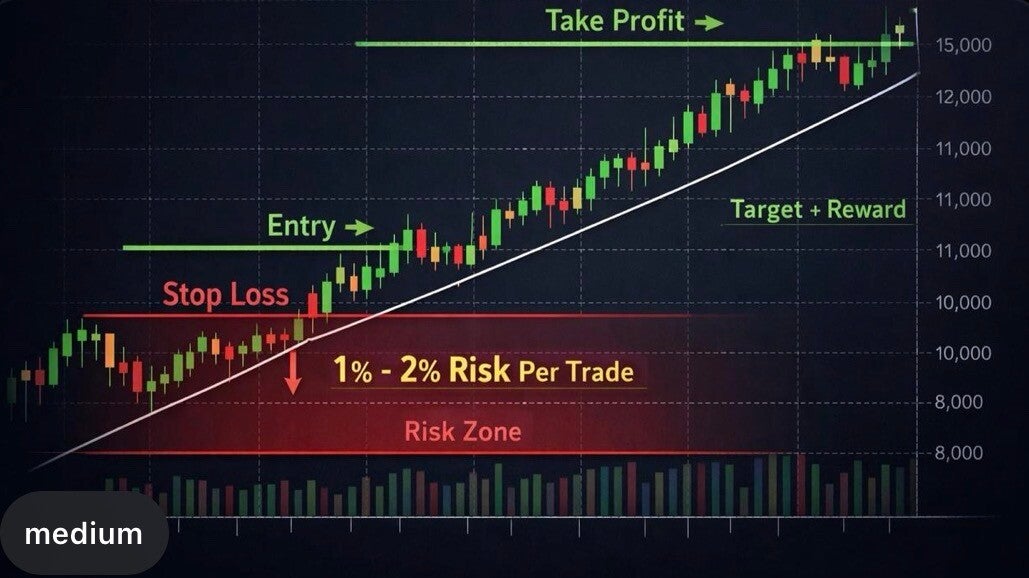
Risk Management
Risk management is the process of controlling how much money you could lose on a trade to protect your trading account over time.
It helps traders decide:
How much money to risk per trade.
Where to place a stop-loss.
How large a position to open.
When to stop trading for the day.
How to protect profits and limit losses.
*The goal isn't to win every trade. The goal is to manage losses so you can continue trading when your next opportunity comes*
5 Key Rules of Risk Management
Rule 1: Risk only a small percentage of your account
Many traders use 0.5%–1% of their account per trade as a learning guideline. This is not a guarantee of safety, but it helps limit the damage from a losing streak.
Example: With a $1,000 account, 1% risk = $10 maximum planned loss on one trade.
Rule 2: Always plan your stop-loss
A stop-loss is an order intended to close a trade if price moves against you to a chosen level. In the ApexFX strategy, place it beyond the setup's invalidation point—for example, beyond the liquidity sweep high or low when appropriate.
Never move your stop farther away just to avoid taking a loss.
Rule 3: Calculate position size
Your lot size should be based on your account balance, risk amount, stop-loss distance, and the instrument you trade.
Don't choose a lot size just because you want a bigger profit. Gold, NAS100, and US30 can have different contract specifications and point values depending on your broker.
Rule 4: Understand risk-to-reward
Risk-to-reward compares how much you could lose with how much you aim to make.
1:1 — risk $10 to target $10.
1:2 — risk $10 to target $20.
1:3 — risk $10 to target $30.
A higher reward target doesn't guarantee a winning trade. Your win rate, costs, and execution matter too.
Rule 5: Set a daily loss limit
Decide in advance when you will stop trading for the day. For example, you might set a limit of two planned losses or a 2% daily loss cap, depending on your account and plan.
Never revenge-trade to recover money you lost.
What is a Stop-Loss?
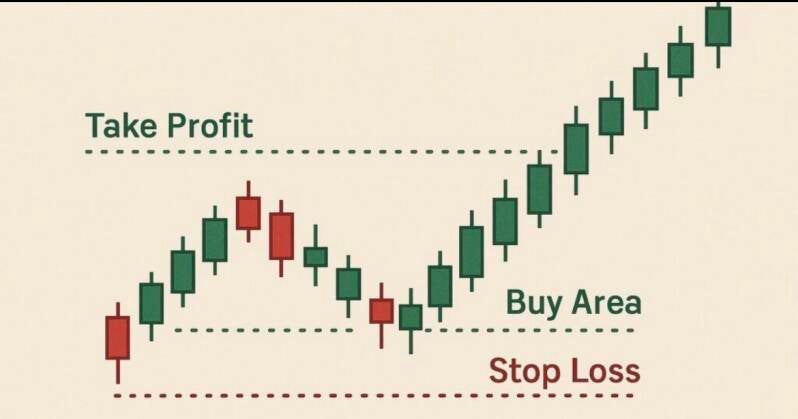
A stop-loss (SL) is an order you place to help close a trade if the market moves against you and reaches a specific price.
The purpose: To limit potential losses, protect your account, and keep your trading decisions disciplined.
How does a Stop-Loss work?
BUY trade (Long)
You buy because you expect price to rise. Your stop-loss is generally placed below your entry, at a level where your trade idea is invalidated.
SELL trade (Short)
You sell because you expect price to fall. Your stop-loss is generally placed above your entry, at a level where your trade idea is invalidated.
How does a Take-Profit work?
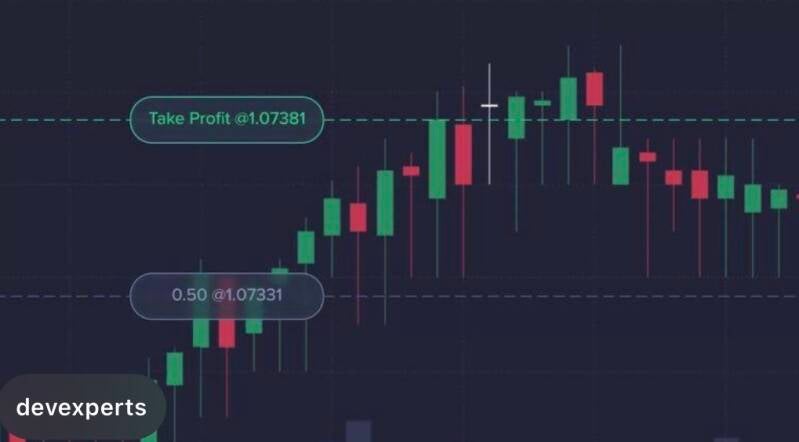
A take-profit (TP) is an order that closes your trade when the market reaches a specific price in your favor, helping you secure your planned profit.
Stop-loss (SL): Helps limit potential losses.
Take-profit (TP): Helps lock in a planned profit.
BUY trade (Long)
You expect price to rise, so your take-profit is generally placed above your entry price.
SELL trade (Short)
You expect price to fall, so your take-profit is generally placed below your entry price.
What is a Daily Loss Limit?
A daily loss limit is the maximum amount of money or percentage of your account you decide you're willing to lose in one trading day before you stop opening new trades.
Its purpose is to protect your capital from:
Revenge trading after a loss.
Taking low-quality setups out of frustration.
Increasing lot sizes to recover money.
Making emotional decisions after a winning or losing streak.
ApexFX rule: When you hit your daily loss limit, you are done trading for the day. No exceptions.
A loss limit is a planned stopping rule, not a guarantee that losses cannot exceed it. Fast markets, slippage, and open positions can create additional losses.
Trading Discipline
Trading discipline is following your trading plan even when your emotions tell you to do something different.
Discipline means:
Waiting for confirmation instead of chasing price.
Accepting a planned loss without becoming emotional.
Taking only valid ApexFX setups.
Respecting your stop-loss and daily limit.
Walking away when the market offers no clear opportunity.
Never confusing a winning trade with proof that a risky decision was smart.
Create Your Own Website With Webador